Summer sun
Hot summers put strain on windows. Sun heats glass and frames, makes rooms warm and fades furniture and floors. Window film, shades, awnings and low-E glass all help.
Check weatherstripping before the hot season. Tight seals keep cool air in and hot, humid air out.
West-facing windows deserve the most attention.
Before summer, check shades, film and awnings for the sunniest windows. Fade-resistant treatments protect furniture and floors, and a few small steps can lower the heat in a room.
Winter cold
Cold glass makes rooms feel chilly, and drafts around sashes add to it. Weatherstripping, caulk and foam help. Better windows reduce cold surfaces.
Interior storm windows and window film kits can add a layer for a season.
A warm hand test near the frame can show where air leaks.
Before winter, look for drafts on a cold, windy day. Mark the spots with tape so you can seal them when it is dry. Weatherstripping and caulk are both easy to apply.
Wind-driven rain
Storms can push water against windows from the side, and it finds any weak flashing or failed caulk. Look for staining on the sill and wall below the window after rain.
Make sure weep holes are clear and sills slope outward.
Flashing and sealant are the defense, which is why installation matters.
After heavy rain, look at the ceiling and wall below each window for stains. A stain that grows over days suggests an active leak, and the sooner we see it, the smaller the repair.
Hail and debris
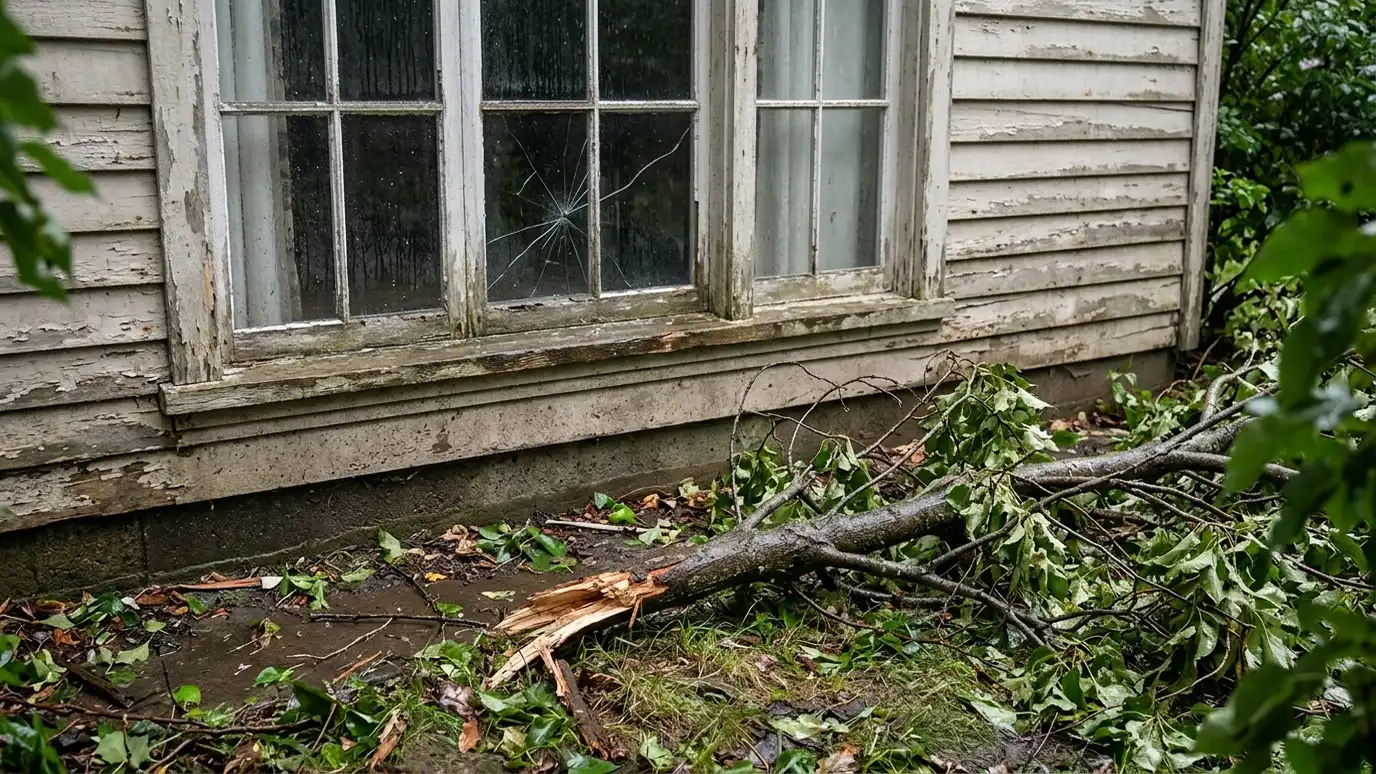
Hail can crack glass and dent frames, and flying branches can break panes. Laminated glass and impact-resistant options hold up better than plain glass.
After a storm, look for cracks, bent screens and damaged seals. Take photos for your records.
Call us for a board-up and repair if needed.
Keep a camera handy for storms. Photos of damage with a date help with claims, and photos of windows before a storm give a baseline. Store them with your home records.
Humidity
Humid air leads to condensation on cold glass, swelling of wood windows and mildew on sills. Use exhaust fans, a dehumidifier and good ventilation. Keep sills clean and dry.
Persistent moisture can lead to wood rot and paint failure.
We do not perform mold remediation. If you find mold, call a specialist.
Dry out damp sills and wipe off condensation in cold weather. Standing water stains wood and can start rot, and a quick wipe each morning is simple and effective.
Seasonal preparation
Make a short checklist for each season: caulk and seals in spring, screens and tracks in summer, locks and drafts in fall and snow or ice around sills in winter.
Keep gutters clean so water does not run down windows.
A routine inspection makes surprises rare.
Make a seasonal reminder on your phone. A short checklist four times a year is enough to keep most windows in good shape.
Keep seals and sills in good order before each season and look at your windows after every big storm.